
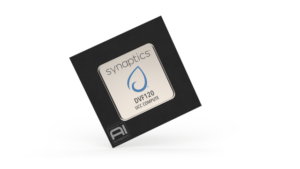
Synaptics Incorporated announced the availability of the DVF120 power-efficient and cost-optimized system on chip (SoC) that leverages over a decade of Synaptics’ domain experience to integrate all major features required for advanced UCC terminals. The DVF120 includes AI-based audio/voice processing, a field-hardened Linux and Android SDK, enterprise-grade security, and low-power mode. Native support of popular collaboration […]
Artificial intelligence
Design World presents the 2023 LEAP Awards Winners: Embedded Computing

Now in its sixth year, Design World’s LEAP Awards continue to showcase the best engineering innovations across several design categories. It’s a large undertaking that wouldn’t be possible without the commitment and support of the engineering community.\ Each year, the editorial team assembles OEM design engineers and academics to create an independent judging panel. Below […]
SMARC-compliant, system-on-modules provide high performance for embedded systems
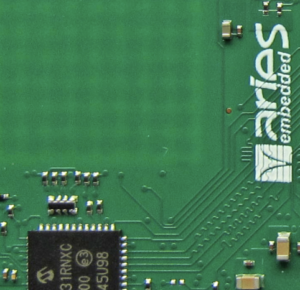
ARIES Embedded presents the new SMARC-compliant system-on-modules (SoM) MRZG2LS and MRZV2LS. The SoMs are based on the Renesas RZ family architecture and provide high performance for embedded systems. The RZ/G2L microprocessor from Renesas includes a Dual Cortex-A55 (1.2 GHz) CPU, 16-bit DDR3L/DDR4 interface, 3D graphics engine with Arm Mali-G31 and video codec (H.264). With the […]
SBC delivers AI edge computing and graphics in small form factor
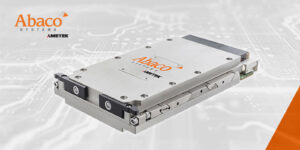
AMETEK Abaco Systems new SBC3902 single board computer (SBC) is designed with the world’s most powerful AI Edge computer, melding autonomous and embedded Edge Computing systems and real-time GPU processing in a small 3U VPX form factor. Aligned with Sensor Open System Architecture (SOSA) slot profile 14.2.16, the 3U VPX IO Intensive computing card offers […]
PCIe card accelerates edge AI workloads
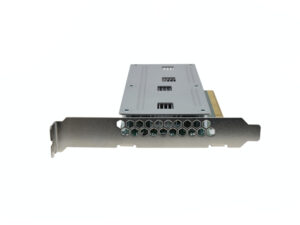
Lanner Electronics introduced the new PCIe AI Acceleration Card, Falcon Lite, powered by Hailo-8 AI processors. The Falcon Lite’s modular PCIe form factor provides a flexible solution for solution providers looking to accelerate edge AI workloads with deployment flexibility and power efficiency. The Lanner Falcon Lite PCIe AI Acceleration Card is designed to meet the soaring demand for […]
PCIe nanoSSD designed in M.2 type 1620 format factor with height of 1.65mm
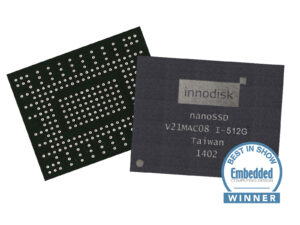
Innodisk announces the release of the first nano SSD PCIe 4TE3 in response to the increasing demands of edge AI miniature design and high computing performance. The nano SSD 4TE3 is a PCIe 4.0 x4 BGA SSD featuring compact size, enhanced performance, and reliability to unlock the potential for 5G, automotive, and aerospace applications. Edge […]
Optical NoC processor designed for domain-specific AI workloads
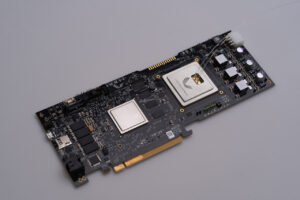
Lightelligence introduced a new big data interconnect paradigm with the launch of Hummingbird, the world’s first Optical Network-on-Chip (oNOC) processor designed for domain-specific artificial intelligence (AI) workloads. Hummingbird utilizes advanced vertically stacked packaging technologies to integrate a photonic chip and an electronic chip into one single package serving as the communications network for data centers […]
Adaptive SoC streamlines complex semiconductor-design verification

AMD announced the AMD Versal Premium VP1902 adaptive system-on-chip (SoC), the world’s largest1 adaptive SoC. The VP1902 adaptive SoC is an emulation-class, chipset-based device designed to streamline the verification of increasingly complex semiconductor designs. Offering 2X2 the capacity over the prior generation, designers can confidently innovate and validate application-specific integrated circuits (ASICs) and SoC designs to help bring […]
New microcontrollers added to embedded processors and controllers portfolio

Mouser Electronics, Inc. recently added new microcontrollers to its extensive Embedded Processors and Controllers portfolio. Microcontrollers are the foundational building blocks of any embedded systems design. Specified for a wide range of use cases, from ultra-low power fitness trackers to industrial automation sensor nodes, and automotive motor control to consumer smart home thermostats, the microcontroller […]
What is TinyML?

Data science has not just remained a field of scientific computing and research. In the internet-connected world, data science, machine learning, and artificial intelligence are far more applicable than ever imagined. No doubt, the very first leap in the practical applications of machine learning and artificial intelligence happened when enterprise websites, including social media platforms, e-commerce […]
