
• Skip to primary navigation
  • Skip to main content
  • Skip to primary sidebar
  • Skip to footer

Microcontroller Tips

Microcontroller engineering resources, new microcontroller products and electronics engineering news

  • Products
    • 8-bit
    • 16-bit
    • 32-bit
    • 64-bit
  • Applications
    • 5G
    • Automotive
    • Connectivity
    • Consumer Electronics
    • EV Engineering
    • Industrial
    • IoT
    • Medical
    • Security
    • Telecommunications
    • Wearables
    • Wireless
  • Learn
    • eBooks / Tech Tips
    • EE Training Days
    • FAQs
    • Learning Center
    • Tech Toolboxes
    • Webinars/Digital Events
  • Resources
    • Design Guide Library
    • LEAP Awards
    • Podcasts
    • White Papers
  • Videos
    • EE Videos & Interviews
    • Teardown Videos
  • EE Forums
    • EDABoard.com
    • Electro-Tech-Online.com
  • Engineering Training Days
  • Advertise
  • Subscribe

What is an embedded processor?

April 1, 2015 By Mike Santora 4 Comments

embedded processor(Learning engineering fundamentals is not only for the student engineer. Encouraging more people to take an interest an interest in science, technology, engineering, and math (STEM) benefits everyone. Sometimes, all it takes is a taste of the basics.

In this series, we introduce some fundamental microcontroller terms and concepts, add context around them, and offer opportunities to not only learn more but for the experienced engineers among you to offer your input.)

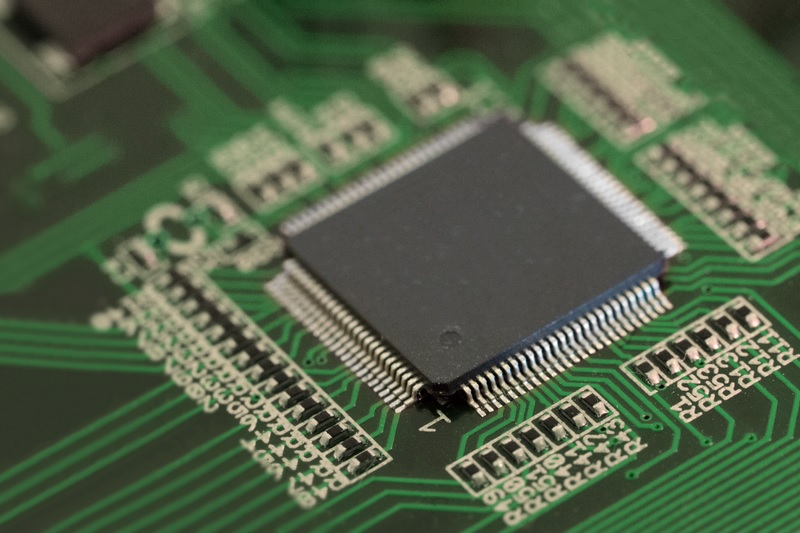
An embedded processor is a type of microprocessor designed into a system to control electrical and mechanical functions. Embedded processors are usually simple in design, limited in computational power and I/O capabilities, and have minimal power requirements. At a basic level, embedded processors are a CPU chip placed in a system that it helps control.

Embedded processors are often confused with microcontrollers. While they do perform similar functions, they integrate with their given system in different ways. The actual functions they perform can also be different as well.

Microcontrollers are the result of technological advances decreasing the size of controllers. Eventually, all of the components of a controller including I/O devices and memory evolved into a single chip, giving us the “micro” in microcontrollers. These chips are small, self-contained devices that have all of the features necessary to control the system they are embedded in.

This control autonomy is the primary difference between microcontrollers and embedded processors. Embedded processors require other external components such as integrated memory and peripheral interfaces to perform their designated functions. The two devices are frequently referred to as one device because embedded processors are often components within a microcontroller.

What is your best description of an embedded processor? Leave your comment in the space below.

What to learn more and ask questions about embedded systems? Visit the EDABoard.com community and join the Beginners of Embedded Systems Group.

Filed Under: Connectivity, IoT Tagged With: edaboardcom

Reader Interactions

Comments

  1. Tushar says

    February 20, 2019 at 9:13 am

    Thank you so much for such a detail

    Reply
    • Geeta says

      October 20, 2021 at 4:07 am

      You’re VERY welcome, Tushar!

      Reply
  2. Ravishankar says

    October 27, 2019 at 10:03 am

    Thanks Lucidly explained…

    Reply

Leave a Reply Cancel reply

Your email address will not be published. Required fields are marked *

Primary Sidebar

Featured Contributions

Can chiplets save the semiconductor supply chain?

Navigating the EU Cyber Resilience Act: a manufacturer’s perspective

The intelligent Edge: powering next-gen Edge AI applications

Engineering harmony: solving the multiprotocol puzzle in IoT device design

What’s slowing down Edge AI? It’s not compute, it’s data movement

More Featured Contributions

EE TECH TOOLBOX

“ee
Tech Toolbox: Connectivity
AI and high-performance computing demand interconnects that can handle massive data throughput without bottlenecks. This Tech Toolbox explores the connector technologies enabling ML systems, from high-speed board-to-board and PCIe interfaces to in-package optical interconnects and twin-axial assemblies.

EE Learning Center

EE Learning Center

EE ENGINEERING TRAINING DAYS

engineering
“bills
“microcontroller
EXPAND YOUR KNOWLEDGE AND STAY CONNECTED
Get the latest info on technologies, tools and strategies for EE professionals.

Footer

Microcontroller Tips

EE World Online Network

  • 5G Technology World
  • EE World Online
  • Engineers Garage
  • Analog IC Tips
  • Battery Power Tips
  • Connector Tips
  • EDA Board Forums
  • Electro Tech Online Forums
  • EV Engineering
  • Power Electronic Tips
  • Sensor Tips
  • Test and Measurement Tips

Microcontroller Tips

  • Subscribe to our newsletter
  • Advertise with us
  • Contact us
  • About us

Copyright © 2026 · WTWH Media LLC and its licensors. All rights reserved.
The material on this site may not be reproduced, distributed, transmitted, cached or otherwise used, except with the prior written permission of WTWH Media.

Privacy Policy