• Skip to primary navigation
  • Skip to main content
  • Skip to primary sidebar
  • Skip to footer

Microcontroller Tips

Microcontroller engineering resources, new microcontroller products and electronics engineering news

  • Products
    • 8-bit
    • 16-bit
    • 32-bit
    • 64-bit
  • Applications
    • 5G
    • Automotive
    • Connectivity
    • Consumer Electronics
    • EV Engineering
    • Industrial
    • IoT
    • Medical
    • Security
    • Telecommunications
    • Wearables
    • Wireless
  • Learn
    • eBooks / Tech Tips
    • EE Training Days
    • FAQs
    • Learning Center
    • Tech Toolboxes
    • Webinars/Digital Events
  • Resources
    • Design Guide Library
    • LEAP Awards
    • Podcasts
    • White Papers
  • Videos
    • EE Videos & Interviews
    • Teardown Videos
  • EE Forums
    • EDABoard.com
    • Electro-Tech-Online.com
  • Engineering Training Days
  • Advertise
  • Subscribe

The difference between microprocessors and application processors

August 9, 2016 By Lee Teschler 2 Comments

Sometimes terminology changes faster than the technology it applies to. That’s arguably the case for the term application processor. Specifically, an application processor is a special kind of microprocessor. The application processor moniker came out of the cellular industry. In a mobile device, it refers to a chip used for the primary processing of cellular phone and other smart functions. This is in contrast with the chips that handle background functions such as running the display, handling wireless communications and managing power drain.
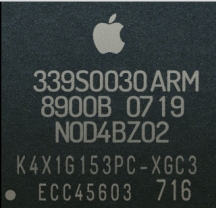
apple application processor
An application processor from the first Apple iPhone.

One big difference between a microprocessor and an application processor is their physical packaging. Many microprocessors are standard ICs with a standard part number. In contrast, mobile application processors are more typically systems on a chip (SoC) that incorporate the IP of one or more processor cores along with other ancillary functions.

Another difference is in the operating systems the two processors run. More general purpose embedded processors typically run a real-time operating system (RTOS) such as Integrity, VxWorks, or QNX Neutrino. An RTOS typically includes a real-time kernel that guarantees a certain capability within a specified time constraint, plus other higher-level services such as file management, protocol stacks, a graphical user interface, and so forth.

In contrast, application processors typically run a mobile operating system environment, basically a specialized RTOS, as well as applications software.
Another point to note is that where microprocessors may incorporate up to four processor cores, the SoCs hosting application processors may include not just multiple processor (typically ARM) cores, but also several graphics processing units (GPUs), cache memories, memory controllers for communicating with off-chip DRAM, audio and video decoders (and encoders), USB host controllers, and other functions as well.

There are a number of application processor suppliers. Among the most well-known are Nvidia with its five-core Tegra processor, Qualcomm with its Snapdragon, and Samsung with the Exynos line. Many low-cost smartphones are powered by a MediaTek processor. Non-smartphone mobile devices such as the Kindle Fire tablet use a Texas Instruments application processor called OMAP (open multi-media applications platform).

Another point to note about the application processors in smartphones is that they are often packaged in a way where a dynamic RAM package mounts on top of the application processor SoC. The technique is known as package-on-package (PoP). The benefit of this technique is that it requires only a separate NAND flash storage to be operable.

Filed Under: Embedded, Lee's blog, microcontroller Tagged With: mediatek, nvidia, qualcomm, samsung, texas instruments

Reader Interactions

Comments

  1. Aaron Hammock says

    December 26, 2018 at 9:08 am

    Thank you for your to the point definition.. It made a lot of sence and helped a lot.

    Reply

Leave a Reply Cancel reply

Your email address will not be published. Required fields are marked *

Primary Sidebar

Featured Contributions

Designing for functional safety in robotics: key considerations for engineers

Can chiplets save the semiconductor supply chain?

Navigating the EU Cyber Resilience Act: a manufacturer’s perspective

The intelligent Edge: powering next-gen Edge AI applications

Engineering harmony: solving the multiprotocol puzzle in IoT device design

More Featured Contributions

EE TECH TOOLBOX

“ee
Tech Toolbox: Electronic Design Automation
This Tech ToolBox helps to clear the path to faster time-to-market by digging into AI-enhanced design, hardware-assisted verification, parasitic extractions, PCB-to-harness integration, and more.

EE Learning Center

EE Learning Center

EE ENGINEERING TRAINING DAYS

engineering
“bills
“microcontroller
EXPAND YOUR KNOWLEDGE AND STAY CONNECTED
Get the latest info on technologies, tools and strategies for EE professionals.

Footer

Microcontroller Tips

EE World Online Network

  • 5G Technology World
  • EE World Online
  • Engineers Garage
  • Analog IC Tips
  • Battery Power Tips
  • Connector Tips
  • EDA Board Forums
  • Electro Tech Online Forums
  • EV Engineering
  • Power Electronic Tips
  • Sensor Tips
  • Test and Measurement Tips

Microcontroller Tips

  • Subscribe to our newsletter
  • Advertise with us
  • Contact us
  • About us

Copyright © 2026 · WTWH Media LLC and its licensors. All rights reserved.
The material on this site may not be reproduced, distributed, transmitted, cached or otherwise used, except with the prior written permission of WTWH Media.

Privacy Policy