Real-Time Innovations (RTI), the largest software framework provider for smart machines and real-world systems, has joined the Baidu Apollo autonomous driving partner ecosystem. Apollo is Baidu’s open-source full-stack software solution for driverless vehicles. RTI joins with an elite group of OEMs, Tier 1 suppliers, developer platforms and startups, in a joint effort to accelerate the development and adoption of autonomous driving on the Apollo driverless operating platform.
Baidu started working on autonomous driving technology in 2013, and its Apollo has become the world’s largest open-source 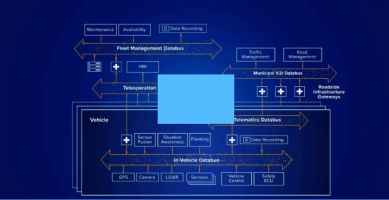 autonomous driving platform. With a robust global ecosystem of nearly 200 partners, Apollo has obtained 1,598 patents and completed more than 6 million kilometers of road tests, showing China’s strength in autonomous driving. In March 2020, NR, the global research organization, listed Apollo as one of the four leaders in autonomous driving in the world.
In a statement, Wang Yunpeng, Senior Director of the Technology Department of Baidu’s Intelligent Driving Group, said that as the world’s leading industrial Internet of Things connectivity solution provider, RTI provides key solutions to enhance the robustness and stability for autonomous driving technology. Baidu is excited to have RTI join its Apollo autonomous driving partner ecosystem and hopes the cooperation will create new breakthroughs in technology.
Apollo Valet Parking (AVP), designed for the private car industry and even car sharing companies, empowers vehicles with the ability to fulfill remote car retrieve, remote car automated parking, self-detective parking spot and even low speed cruise, while greatly improving the parking experience for car drivers. AVP today is required by even more car OEMs as a new feature. The Baidu AVP solution consists of software such as sensing, perception, planning and control. Baidu also developed a domain controller called Apollo Computing Unit (ACU), already integrated with RTI Connext DriveTM software, aimed at mass production projects to provide the full stack capability for car OEMs.
RTI Connext Drive, based upon the open Data Distribution ServiceTM (DDS) standard, is a software framework that enables superior communications reliability, a critical factor in the development and operation of autonomous vehicles. With Connext Drive, manufacturers can be more responsive and innovative in this fast-changing market. They get more value out of their applications by using a data-centric framework that supports their needs now and in the future. Connext Drive builds on proven RTI technology already used in over 250 autonomous vehicle programs around the world, as well as over 1,500 other demanding, real-time, intelligent distributed systems.
“The autonomous vehicle market has experienced rapid growth in the last several years. We developed RTI Connext Drive to give our customers and partners the tools to solve complex autonomy challenges,” said Bob Leigh, Senior Market Development Director, Commercial at RTI. “In joining the Apollo ecosystem, we are looking forward to conquering the challenges hindering autonomous vehicle deployment and adoption and moving into the next phase of autonomy.”
Read more about RTI’s work in the autonomous driving industry here.



Leave a Reply