• Skip to primary navigation
  • Skip to main content
  • Skip to primary sidebar
  • Skip to footer

Microcontroller Tips

Microcontroller engineering resources, new microcontroller products and electronics engineering news

  • Products
    • 8-bit
    • 16-bit
    • 32-bit
    • 64-bit
  • Applications
    • 5G
    • Automotive
    • Connectivity
    • Consumer Electronics
    • EV Engineering
    • Industrial
    • IoT
    • Medical
    • Security
    • Telecommunications
    • Wearables
    • Wireless
  • Learn
    • eBooks / Tech Tips
    • EE Training Days
    • FAQs
    • Learning Center
    • Tech Toolboxes
    • Webinars/Digital Events
  • Resources
    • Design Guide Library
    • LEAP Awards
    • Podcasts
    • White Papers
  • Videos
    • EE Videos & Interviews
    • Teardown Videos
  • EE Forums
    • EDABoard.com
    • Electro-Tech-Online.com
  • Engineering Training Days
  • Advertise
  • Subscribe

Fiber-optic transceiver integrates 100 Mb/sec optical port in one component

November 18, 2020 By Redding Traiger Leave a Comment

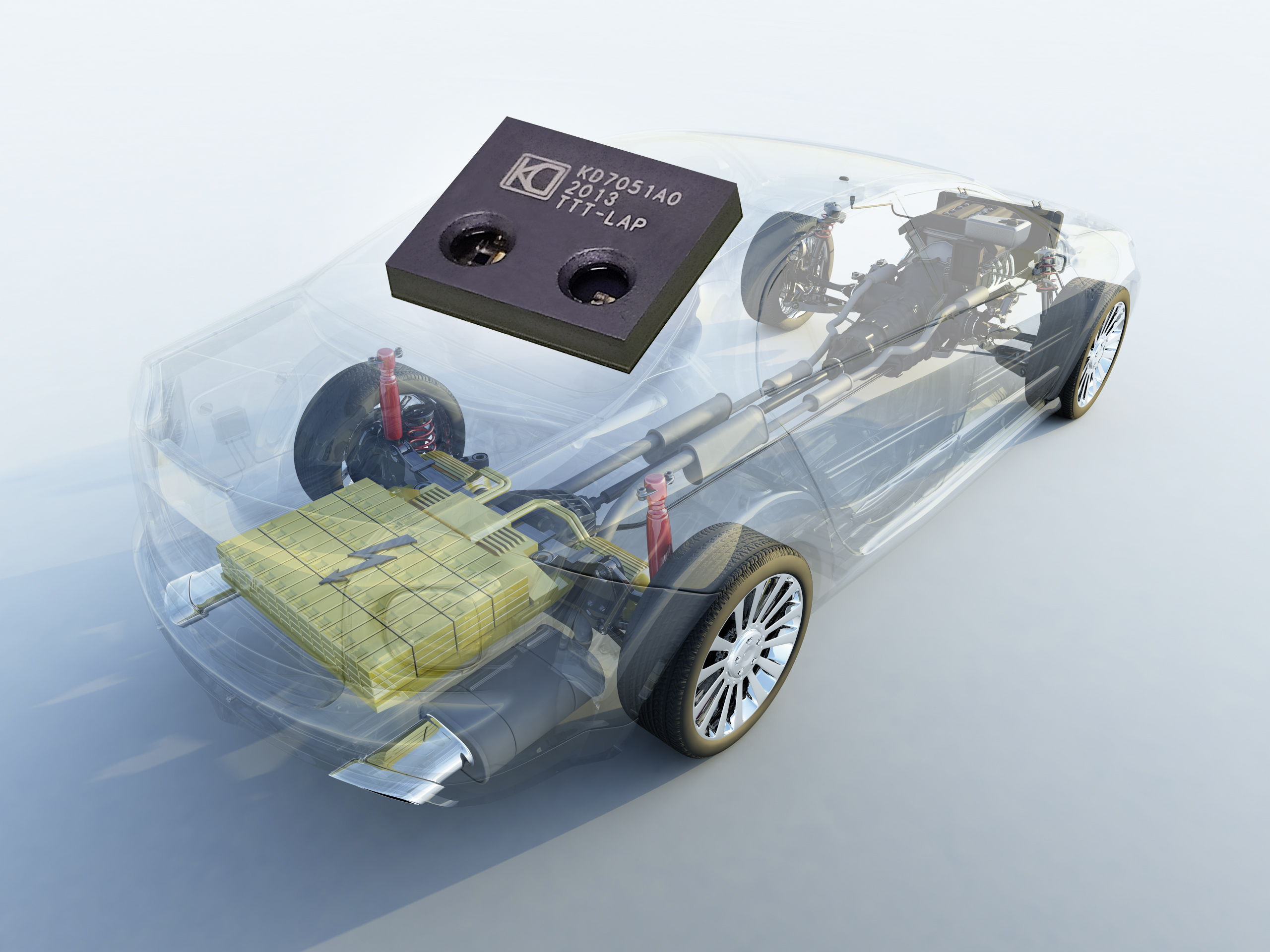
KDPOF presents the brand new integrated Fiber Optic Transceiver (FOT) KD7051. It is the first device for optical in-vehicle connectivity that incorporates the transceiver IC, optoelectronics, and optics. The integrated FOT is a 100 Mb/s optical port in one single component. KDPOF’s new KD7051 thus substantially reduces the overall expense compared to STP (shielded twisted pair of copper wires). Further advantages are no margin stacking between links in the supply chain and supply chain simplification. Consequently, it offers competitive pricing for EMC critical or galvanic isolated critical links. Applications include battery management systems, camera and sensor links, fast Ethernet links, and smart antenna links.

KDPOF’s new transceiver IC KD7051 offers a complete new FOT design. It reuses low-cost MEMs encapsulation and allows SMD reflow assembly with 8 by 7 mm LGA components. The FOT is fully shielded against electromagnetic radiation. Fiber connection is done with a very simple plastic connector placed on top. The temperature range, from -40 °C to +105 °C, conforms with harsh automotive environmental requirements. With a vibration class of V2, it withstands motor conditions. Additionally, the device endures water without sealing. EMC performance is excellent even with the ECU shield case removed, as shielding is integrated into the PCB component. The assembly of the FOT and the IC in the PCB is simplified. Optics implement Tx and Rx lenses. The first prototypes are available.

As a plastic optical fiber with a large diameter, POF is more cost-effective to manufacture and install: installation is just easy plug and play; winding and clamping are similar to copper cables. Moreover, during the car assembly, the optical harness can be installed in the same process as the copper harness. POF has been present in vehicles for more than 10 years and is installed in millions of cars.

You may also like:

  • Embedded systems software and programming
    Embedded systems software and programming for a safer world
  • green artificial intelligence
    How “green” is your Artificial Intelligence?
  • artificial intelligence benchmarks
    Benchmarking AI from the edge to the cloud

  • Emerging memory technologies – Virtual Roundtable (part 1 of 2)
  • Memory basics
    Memory basics – volatile, non-volatile and persistent

Filed Under: Applications, Automotive, Connectivity, Ethernet, Tools, transceivers Tagged With: kdpof

Reader Interactions

Leave a Reply Cancel reply

Your email address will not be published. Required fields are marked *

Primary Sidebar

Featured Contributions

Can chiplets save the semiconductor supply chain?

Navigating the EU Cyber Resilience Act: a manufacturer’s perspective

The intelligent Edge: powering next-gen Edge AI applications

Engineering harmony: solving the multiprotocol puzzle in IoT device design

What’s slowing down Edge AI? It’s not compute, it’s data movement

More Featured Contributions

EE TECH TOOLBOX

“ee
Tech Toolbox: Connectivity
AI and high-performance computing demand interconnects that can handle massive data throughput without bottlenecks. This Tech Toolbox explores the connector technologies enabling ML systems, from high-speed board-to-board and PCIe interfaces to in-package optical interconnects and twin-axial assemblies.

EE Learning Center

EE Learning Center

EE ENGINEERING TRAINING DAYS

engineering
“bills
“microcontroller
EXPAND YOUR KNOWLEDGE AND STAY CONNECTED
Get the latest info on technologies, tools and strategies for EE professionals.

Footer

Microcontroller Tips

EE World Online Network

  • 5G Technology World
  • EE World Online
  • Engineers Garage
  • Analog IC Tips
  • Battery Power Tips
  • Connector Tips
  • EDA Board Forums
  • Electro Tech Online Forums
  • EV Engineering
  • Power Electronic Tips
  • Sensor Tips
  • Test and Measurement Tips

Microcontroller Tips

  • Subscribe to our newsletter
  • Advertise with us
  • Contact us
  • About us

Copyright © 2026 · WTWH Media LLC and its licensors. All rights reserved.
The material on this site may not be reproduced, distributed, transmitted, cached or otherwise used, except with the prior written permission of WTWH Media.

Privacy Policy