
Siemens’ new PAVE360 Automotive drives next-generation vehicle development with real-world validation New off-the-shelf, cloud-based, digital twin offering, PAVE360 Automotive, empowers automakers and suppliers to begin full-system development on day one, reducing setup time from months to days Delivers a fully integrated, system-level digital twin that speeds up development of advanced driver-assistance systems (ADAS), autonomous driving […]
Expanded HMI models for defect detection

Lattice Semiconductor announced the latest release of the Lattice sensAI solution stack, delivering expanded model support, enhanced AI performance, and greater deployment flexibility for a wider range of edge applications. With new purpose-built models, upgraded tools, and improved compatibility, Lattice sensAI empowers developers to achieve higher performance, lower power consumption, and faster integration of AI […]
Evaluation boards and SDK available for developers

RRenesas Electronics Corporation has released silicon samples, full evaluation boards, and the RoX Whitebox SDK for the R-Car X5H, a 3nm, multi-domain automotive SoC designed to consolidate ADAS, IVI, and gateway workloads on a single device. The R-Car X5H delivers up to 400 TOPS AI performance, 4 TFLOPS-class GPU capability, and over 1,000k DMIPS from 32 […]
Intel Amston Lake Q7 module targets industrial HMIs
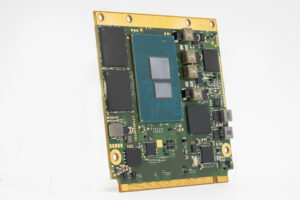
Tria Technologies has launched two new Qseven (Q7) Computer-on-Modules (COMs), ensuring Q7 designs remain viable until at least 2034, with an optional extension to 2039. The new modules, TRIA-Q7-ASL and TRIA-Q7-ALN, are based on the popular Q7 entry-level standard and provide both a substantial performance boost and a guaranteed product lifetime extension, making Q7 a […]
Dual-band Wi-Fi 6 MCUs target IoT

Renesas introduced the RA6W1 dual-band Wi-Fi 6 wireless MCU (datasheet) and announced the RA6W2 variant integrating Wi-Fi 6 + Bluetooth LE for always-connected IoT designs in smart home, industrial, medical, and consumer devices. Based on an Arm Cortex-M33 at 160 MHz with 704 KB SRAM, the devices support 2.4/5 GHz operation and low-power modes down to 200 nA–4 […]
42 V I2C power monitors target portable device telemetry

Microchip Technology has introduced the PAC1711 and PAC1811 digital power monitors for battery-operated and energy-constrained systems that need continuous power measurement with minimal measurement overhead. Microchip states the devices consume about half the power of comparable solutions under typical operating conditions at a 1024 samples-per-second rate, while providing alert functions to reduce how often a […]
Embedded IDE adds in-editor AI for code review

MIKROE has released an updated version of its NECTO multi-architectural IDE that adds integrated AI assistance inside the code editor. The new capability is intended to support embedded developers during implementation and review by enabling context-aware help while working directly with target boards and microcontrollers. Within the editor, the NECTO AI Code Assistant can repair […]
SOSA-aligned 3U VPX SBC adds 100GbE for defense systems
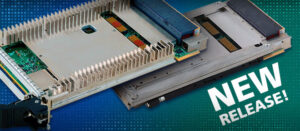
Acromag has introduced a 3U OpenVPX single board computer aligned to the Sensor Open Systems Architecture (SOSA) Technical Standard, targeting I/O-intensive embedded compute for defense, aerospace, and other deployed platforms. The board is available in air-cooled and conduction-cooled variants, supporting integration into VPX chassis with different thermal management requirements. Compute is provided by an Intel […]
Low-voltage BLE SoC targets glucose monitors and biosensor wearables

Nordic Semiconductor has introduced the nRF54LV10A, a Bluetooth LE system-on-chip designed for low-voltage, space-constrained healthcare wearables such as biosensors and continuous glucose monitors. The device operates from a 1.2 V to 1.7 V supply range and can be powered directly from a single silver-oxide coin cell, supporting compact power architectures for body-worn designs. The nRF54LV10A […]
Chip antennas let you add three Wi-Fi bands to IoT devices
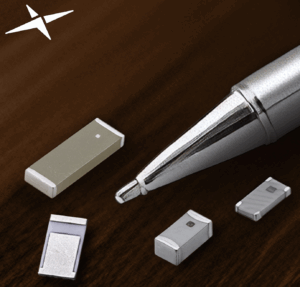
Taoglas announced the expansion of its embedded antenna portfolio with a new range of Low Temperature Co-fired Ceramic (LTCC) chip antennas optimized for Wi-Fi 6/7, Ultra-Wideband (UWB), and ISM connectivity. The new ILA.257, ILA.68, and ILA.89 deliver exceptional performance in ultra-compact packages – with minimal keep out area – designed for next-generation IoT, consumer, industrial, and wearable applications […]
