• Skip to primary navigation
  • Skip to main content
  • Skip to primary sidebar
  • Skip to footer

Microcontroller Tips

Microcontroller engineering resources, new microcontroller products and electronics engineering news

  • Products
    • 8-bit
    • 16-bit
    • 32-bit
    • 64-bit
  • Applications
    • 5G
    • Automotive
    • Connectivity
    • Consumer Electronics
    • EV Engineering
    • Industrial
    • IoT
    • Medical
    • Security
    • Telecommunications
    • Wearables
    • Wireless
  • Learn
    • eBooks / Tech Tips
    • EE Training Days
    • FAQs
    • Learning Center
    • Tech Toolboxes
    • Webinars/Digital Events
  • Resources
    • Design Guide Library
    • LEAP Awards
    • Podcasts
    • White Papers
  • Videos
    • EE Videos & Interviews
    • Teardown Videos
  • EE Forums
    • EDABoard.com
    • Electro-Tech-Online.com
  • Engineering Training Days
  • Advertise
  • Subscribe

High-rez lidar unit optimized for autonomous driving apps

September 2, 2020 By Aimee Kalnoskas Leave a Comment

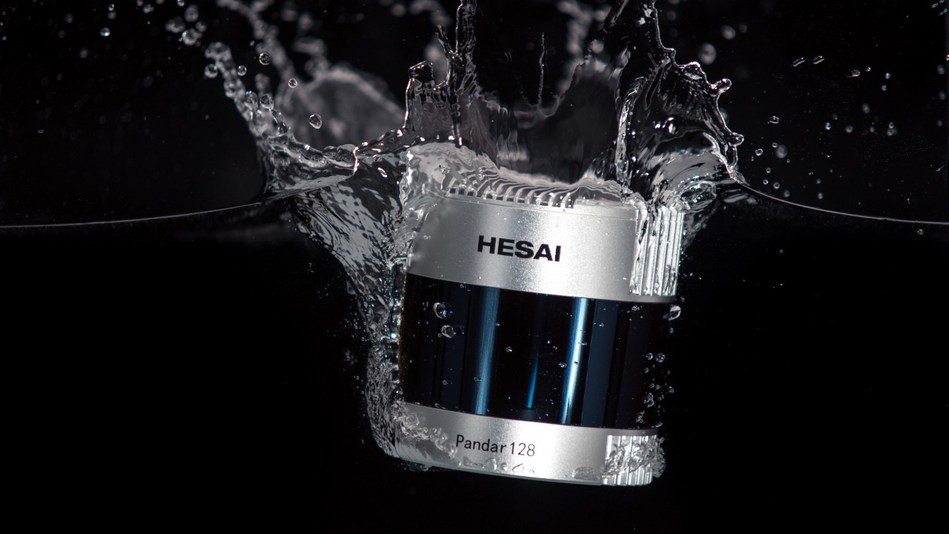
Hesai officially released its next-generation mechanical LiDAR, Pandar128. Designed for automotive volume production, Pandar128 is one of the most advanced mechanical LiDARs available and offers an ideal solution for autonomous driving applications.

  • Resolution: up to 0.1° (H) * 0.125° (V) at 10 Hz refresh rate
  • Up to 6,912,000 points/sec
  • Detection capability: 200 m (10% reflectivity target)
  • High reflectivity accuracy and precision
  • Higher ingress protection rating: IP6K9K

Pandar128 represents a massive leap in performance over existing mechanical LiDAR sensors. It offers the finest horizontal resolution (up to 0.1°), 1.5x the total points produced by other available 128-channel LiDARs, and has a detection capability of 200 meters @ 10% reflectivity. This unrivaled measurement frequency and distance enable superb perception over an extended range, providing autonomous driving systems with longer reaction time-critical for safe operation at medium-to-high driving speeds.

Pandar128 is designed with several other noteworthy improvements. It offers a higher level of ingress protection (IP6K9K), ensuring reliability in all weather conditions. Additionally, Hesai’s proprietary, industry-leading interference rejection feature has been further refined, reducing the noise rate.

Despite comprising twice the number of beams as Hesai’s Pandar64, Pandar128 retains a small form factor: it is just 7 mm taller and weighs only 1.63 kg. Pandar128’s compact design allows for seamless integration into a vehicle’s exterior for a more aesthetic configuration. The new system architecture also minimizes power consumption, requiring a maximum of 27 W (10 Hz), despite the massive data volume.

Most notably, Pandar128 is designed for automotive volume production. It has gone through comprehensive testing and is embedded with several innovative features, such as self-diagnosis for each beam. The sensor data is also encoded to safeguard against data misrepresentation or falsification. Referencing the full array of international automotive standards at the component, product, and process-level, Pandar128 has been meticulously scrutinized and optimized from the ground-up to ensure user safety, system integrity, and reliability.

A critical sensor in autonomous driving systems, LiDAR – and its production readiness – is a prerequisite for the large-scale deployment of autonomous vehicles. With Pandar128, Hesai continues to push the boundaries of LiDAR technology and engineering to help achieve this ultimate goal.

You may also like:


  • Open standards for driverless cars
  • CANbus uber allas
    CAN for better autonomous vehicles

  • Safety and cybersecurity for the connected car
  • acienna
    More accurate positioning for autonomous vehicles
  • network slicing
    Cybersecurity testing in 5G automotive designs

Filed Under: Applications, Automotive Tagged With: hesai

Reader Interactions

Leave a Reply Cancel reply

Your email address will not be published. Required fields are marked *

Primary Sidebar

Featured Contributions

Designing for functional safety in robotics: key considerations for engineers

Can chiplets save the semiconductor supply chain?

Navigating the EU Cyber Resilience Act: a manufacturer’s perspective

The intelligent Edge: powering next-gen Edge AI applications

Engineering harmony: solving the multiprotocol puzzle in IoT device design

More Featured Contributions

EE TECH TOOLBOX

“ee
Tech Toolbox: Aerospace & Defense
This Tech Toolbox dives into the technical realities of modern defense, exploring how MBSE is streamlining aerospace design and what’s next for radar and electronic warfare.

EE Learning Center

EE Learning Center

EE ENGINEERING TRAINING DAYS

engineering
“bills
“microcontroller
EXPAND YOUR KNOWLEDGE AND STAY CONNECTED
Get the latest info on technologies, tools and strategies for EE professionals.

Footer

Microcontroller Tips

EE World Online Network

  • 5G Technology World
  • EE World Online
  • Engineers Garage
  • Analog IC Tips
  • Battery Power Tips
  • Connector Tips
  • EDA Board Forums
  • Electro Tech Online Forums
  • EV Engineering
  • Power Electronic Tips
  • Sensor Tips
  • Test and Measurement Tips

Microcontroller Tips

  • Subscribe to our newsletter
  • Advertise with us
  • Contact us
  • About us

Copyright © 2026 · WTWH Media LLC and its licensors. All rights reserved.
The material on this site may not be reproduced, distributed, transmitted, cached or otherwise used, except with the prior written permission of WTWH Media.

Privacy Policy