• Skip to primary navigation
  • Skip to main content
  • Skip to primary sidebar
  • Skip to footer

Microcontroller Tips

Microcontroller engineering resources, new microcontroller products and electronics engineering news

  • Products
    • 8-bit
    • 16-bit
    • 32-bit
    • 64-bit
  • Applications
    • 5G
    • Automotive
    • Connectivity
    • Consumer Electronics
    • EV Engineering
    • Industrial
    • IoT
    • Medical
    • Security
    • Telecommunications
    • Wearables
    • Wireless
  • Learn
    • eBooks / Tech Tips
    • EE Training Days
    • FAQs
    • Learning Center
    • Tech Toolboxes
    • Webinars/Digital Events
  • Resources
    • Design Guide Library
    • LEAP Awards
    • Podcasts
    • White Papers
  • Videos
    • EE Videos & Interviews
    • Teardown Videos
  • EE Forums
    • EDABoard.com
    • Electro-Tech-Online.com
  • Engineering Training Days
  • Advertise
  • Subscribe

Reference design handles enhanced 3D computer vision for edge AI

June 28, 2021 By Redding Traiger Leave a Comment

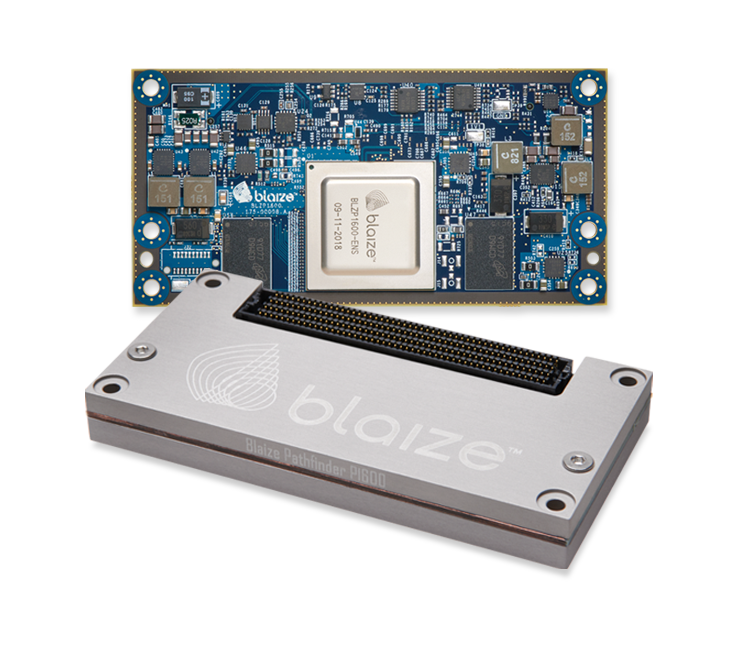
Blaize and eYs3D Microelectronics announced a reference design for the Blaize Pathfinder P1600 SoM (system on a module).

The Blaize Pathfinder P1600 is integrated with the eYs3D Depth Camera product line of 3D cameras. The camera line features unique stereo vision capabilities that deliver millimeter-level accuracy of depth at optimal range and are used for indoor and outdoor AI-based autonomous operation, including robotics, security, touchless control, autonomous vehicles, and smart retail. As an example, these advanced capabilities eliminate the use of costly Lidar implementations for robotics and other services.

Taking advantage of the Blaize Graph Streaming Processor (GSP) architecture, the combined design offers better depth and distance sensing via the camera’s 3D sensor application that includes a sensor fusion function enabling a combination of two sets of data – RGB camera data and Depth data. Processing efficiency and user-friendly programmability for the entire end-to-end application enable reductions in “performance per watt” system metrics. In addition, the Blaize P1600 can convert the depth camera’s USB output to high-speed Ethernet connectivity, for enhanced video processing. Software development kits for the reference design will accommodate a wide range of operating systems, programming languages, and development tools.

Blaize Leadership Focus on Systems & Energy Efficiency, Low latency, Flexibility The Blaize embedded and accelerator platforms are built on the Blaize Graph Streaming Processor (GSP) architecture designed for the demands of edge computing. The Blaize Pathfinder P1600 embedded Systems on Module (SOM) brings the programmability and efficiency benefits of the GSP to embedded edge AI applications deployed at the sensor edge, or on the network edge. The Blaize AI Software Suite comprised of Blaize Picasso and AI Studio leads the industry with open standards and ease of accessibility reducing the time to get edge applications into production from months to days.
You may also like:

  • quantum computing system architectures
    Quantum computing system architectures

  • Mioty LPWAN – what’s it good for?

  • How does mioty compare with other flavors of LPWAN?

  • What is mioty telegram splitting LPWAN?

  • How does RISC-V fit into automotive systems?

Filed Under: Artificial intelligence/ML, Automotive, Camera modules, Products, Reference designs, Robotics/Drones, Security, SoM, Tools Tagged With: blaize

Reader Interactions

Leave a Reply Cancel reply

Your email address will not be published. Required fields are marked *

Primary Sidebar

Featured Contributions

Can chiplets save the semiconductor supply chain?

Navigating the EU Cyber Resilience Act: a manufacturer’s perspective

The intelligent Edge: powering next-gen Edge AI applications

Engineering harmony: solving the multiprotocol puzzle in IoT device design

What’s slowing down Edge AI? It’s not compute, it’s data movement

More Featured Contributions

EE TECH TOOLBOX

“ee
Tech Toolbox: Connectivity
AI and high-performance computing demand interconnects that can handle massive data throughput without bottlenecks. This Tech Toolbox explores the connector technologies enabling ML systems, from high-speed board-to-board and PCIe interfaces to in-package optical interconnects and twin-axial assemblies.

EE Learning Center

EE Learning Center

EE ENGINEERING TRAINING DAYS

engineering
“bills
“microcontroller
EXPAND YOUR KNOWLEDGE AND STAY CONNECTED
Get the latest info on technologies, tools and strategies for EE professionals.

Footer

Microcontroller Tips

EE World Online Network

  • 5G Technology World
  • EE World Online
  • Engineers Garage
  • Analog IC Tips
  • Battery Power Tips
  • Connector Tips
  • EDA Board Forums
  • Electro Tech Online Forums
  • EV Engineering
  • Power Electronic Tips
  • Sensor Tips
  • Test and Measurement Tips

Microcontroller Tips

  • Subscribe to our newsletter
  • Advertise with us
  • Contact us
  • About us

Copyright © 2026 · WTWH Media LLC and its licensors. All rights reserved.
The material on this site may not be reproduced, distributed, transmitted, cached or otherwise used, except with the prior written permission of WTWH Media.

Privacy Policy