 As AI technology becomes ubiquitous, the impact of unusual weather also gains more attention. The most impressive case was the sudden weather change in Denver, the US, last September that the temperature dropped from 37°C to minus overnight. Faced with such fluctuation, the devices which maintained the daily life of the city in order, like the facilities for traffic flow analysis, surveillance, and AI visual analytics, could no longer operate normally, or even damaged, due to the lack of endurance to the extreme weathers.
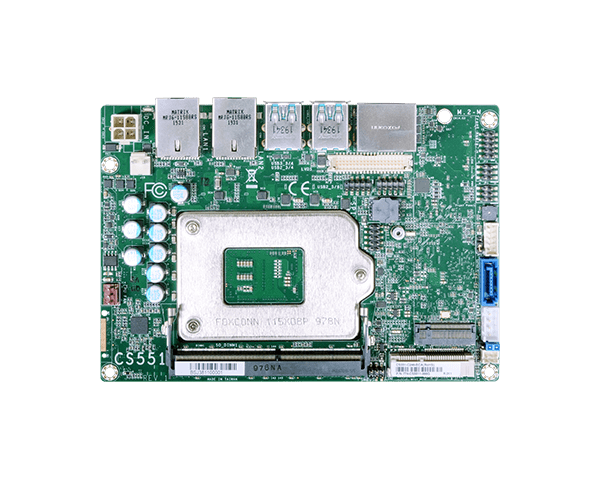
Inspired by the situation, DFI brought an innovative design into the newly-released CS551, the “World’s First 3.5″ desktop SBC with auto heat-up“. This breakthrough gives devices high performance with a smaller footprint for image analysis or heavy workloads, no matter at subzero temperatures or under heatwaves.
The CS551 is DFI’s first SBC downsized from Mini-ITX form factor (195mm x 170mm) to 3.5″ (146mm x 102mm). Powered by Intel Core 8/9 Gen processors with the Intel Xeon server-grade ECC support for memory protection offered by the Intel C246 chipset, this small board enjoys desktop computing performance and deployment flexibility at the same time.
In terms of fighting against extreme weather, the operating temperature of the CS551 SBC can go down to -30°C, which is not commonly supported by the motherboards with desktop performance. The endurance to subzero temperatures leverages the auto-on heater attached to the board to warm up or cold boot the processor for operation. Equipment can thus operate normally without being shut down in the snow.
Apart from low temperatures, the endurance under 80°C heat waves with the fanless design is also noteworthy, since efficient heat dissipation at high temperatures normally requires a fan. Here the smart adjustment of computing resources between CPU and GPU is adapted to avoid throttling under heavy workload at up to 80°C. This prevents computers from crash down as well as greatly improves the application stability throughout a year.
For the devices that are deployed outdoor or may expose to extreme temperatures, like unmanned transportation vehicles, robotic arms in cold warehouses, or cold-chain related applications, the coming out of CS551 is expected to offer more reliable performance and extended longevity.


Leave a Reply