• Skip to primary navigation
  • Skip to main content
  • Skip to primary sidebar
  • Skip to footer

Microcontroller Tips

Microcontroller engineering resources, new microcontroller products and electronics engineering news

  • Products
    • 8-bit
    • 16-bit
    • 32-bit
    • 64-bit
  • Applications
    • 5G
    • Automotive
    • Connectivity
    • Consumer Electronics
    • EV Engineering
    • Industrial
    • IoT
    • Medical
    • Security
    • Telecommunications
    • Wearables
    • Wireless
  • Learn
    • eBooks / Tech Tips
    • EE Training Days
    • FAQs
    • Learning Center
    • Tech Toolboxes
    • Webinars/Digital Events
  • Resources
    • Design Guide Library
    • LEAP Awards
    • Podcasts
    • White Papers
  • Videos
    • EE Videos & Interviews
    • Teardown Videos
  • EE Forums
    • EDABoard.com
    • Electro-Tech-Online.com
  • Engineering Training Days
  • Advertise
  • Subscribe

RFIC provides single-chip radar imaging for automotive apps

May 20, 2021 By Redding Traiger Leave a Comment

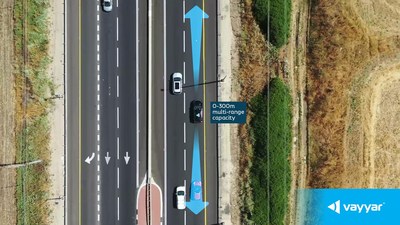
Vayyar Imaging has launched the world’s first multi-range “XRR” chip, a single RFIC with a range of 0-300m, designed for passenger cars, trucks, and motorcycles. Supported by a 48-antenna MIMO array, the leading-edge platform provides radar imaging with unprecedented accuracy for numerous safety applications, without the need for external processors. Vayyar’s XRR chip – AEC-Q100 qualified and ASIL-B compliant – is unmatched in terms of range, resolution, and performance. With an ultra-wide field of view and rich 4D point cloud imaging, it delivers unprecedented multifunctionality on a single-chip platform, supporting dozens of Advanced Driver Assistance Systems (ADAS), Advanced Rider Assistance Systems (ARAS), and autonomy features. This eliminates the need for multiple, costly vehicle sensors and reduces costs, complexity, hardware, software, power consumption, wiring, and integration efforts.

Affording a range of 0-300m, the multi-range XRR chip differentiates between static obstacles such as dividers, curbs, and parked vehicles, and between different types of VRUs, moving vehicles, and other hazards. In low-speed environments such as parking lots, the XRR chip’s uSRR and SRR sensing support advanced parking assistance, scanning the vehicle’s surroundings for pedestrians and obstacles. On the open road, MRR and LRR capabilities facilitate a variety of ADAS and autonomy applications such as Lane Change Assist (LCA), Adaptive Cruise Control (ACC), Blind Spot Detection (BSD), Collision Warnings (fCW/rCW), Cross-Traffic Alerting (CTA) and Autonomous Emergency Braking (AEB).

Just two XRR chips earn any vehicle 33 Euro NCAP safety points while replacing over ten traditional ADAS sensors. Vayyar’s platform supports nine different Euro NCAP ADAS requirements for 2023, protecting pedestrians, cyclists, and motorcyclists, while maximizing safety ratings.

Compared with alternatives such as cameras, standard radar, and LIDAR, Vayyar’s 4D imaging radar delivers unprecedented multifunctionality on a single-chip platform, maximizing affordability, coverage, range, resolution, and robustness. The XRR chip provides real-time 4D detection, identifying and tracking numerous objects simultaneously, even in extremely challenging conditions such as heavy traffic, darkness, or fog.

As automakers strive to protect motorists and their passengers, Vayyar’s multi-range XRR chip is redefining ADAS, ARAS, and autonomy, making the utmost safety available to all vehicles.

You may also like:

  • quantum computing system architectures
    Quantum computing system architectures

  • Mioty LPWAN – what’s it good for?

  • How does mioty compare with other flavors of LPWAN?

  • How does RISC-V fit into automotive systems?

  • What’s the future for RISC-V in 5G?

Filed Under: Applications, Automotive, Hardware, Products, Security, Software, Tools, Tracking Tagged With: vayyar

Reader Interactions

Leave a Reply Cancel reply

Your email address will not be published. Required fields are marked *

Primary Sidebar

Featured Contributions

Navigating the EU Cyber Resilience Act: a manufacturer’s perspective

The intelligent Edge: powering next-gen Edge AI applications

Engineering harmony: solving the multiprotocol puzzle in IoT device design

What’s slowing down Edge AI? It’s not compute, it’s data movement

Five challenges for developing next-generation ADAS and autonomous vehicles

More Featured Contributions

EE TECH TOOLBOX

“ee
Tech Toolbox: Power Efficiency
Discover proven strategies for power conversion, wide bandgap devices, and motor control — balancing performance, cost, and sustainability across industrial, automotive, and IoT systems.

EE Learning Center

EE Learning Center

EE ENGINEERING TRAINING DAYS

engineering
“bills
“microcontroller
EXPAND YOUR KNOWLEDGE AND STAY CONNECTED
Get the latest info on technologies, tools and strategies for EE professionals.

Footer

Microcontroller Tips

EE World Online Network

  • 5G Technology World
  • EE World Online
  • Engineers Garage
  • Analog IC Tips
  • Battery Power Tips
  • Connector Tips
  • EDA Board Forums
  • Electro Tech Online Forums
  • EV Engineering
  • Power Electronic Tips
  • Sensor Tips
  • Test and Measurement Tips

Microcontroller Tips

  • Subscribe to our newsletter
  • Advertise with us
  • Contact us
  • About us

Copyright © 2025 · WTWH Media LLC and its licensors. All rights reserved.
The material on this site may not be reproduced, distributed, transmitted, cached or otherwise used, except with the prior written permission of WTWH Media.

Privacy Policy