• Skip to primary navigation
  • Skip to main content
  • Skip to primary sidebar
  • Skip to footer

Microcontroller Tips

Microcontroller engineering resources, new microcontroller products and electronics engineering news

  • Products
    • 8-bit
    • 16-bit
    • 32-bit
    • 64-bit
  • Applications
    • 5G
    • Automotive
    • Connectivity
    • Consumer Electronics
    • EV Engineering
    • Industrial
    • IoT
    • Medical
    • Security
    • Telecommunications
    • Wearables
    • Wireless
  • Learn
    • eBooks / Tech Tips
    • EE Training Days
    • FAQs
    • Learning Center
    • Tech Toolboxes
    • Webinars/Digital Events
  • Resources
    • Design Guide Library
    • LEAP Awards
    • Podcasts
    • White Papers
  • Videos
    • EE Videos & Interviews
    • Teardown Videos
  • EE Forums
    • EDABoard.com
    • Electro-Tech-Online.com
  • Engineering Training Days
  • Advertise
  • Subscribe

Universal flash storage devices sport automotive qualification specs

March 26, 2019 By Aimee Kalnoskas Leave a Comment

Toshiba Memory America, Inc. today announced that it has begun sampling new Automotive UFS JEDEC Version 2.1 embedded memory solutions. The company’s Automotive UFS supports a wide temperature range (-40°C to +105°C), meets AEC-Q100 Grade2 requirements and offers the enhanced reliability required by various automotive applications. The lineup consists of four capacities: 32 gigabytes, 64GB, 128GB, and 256GB. The new products are embedded flash memory devices that integrate BiCS FLASH 3D flash memory and a controller in a single package.
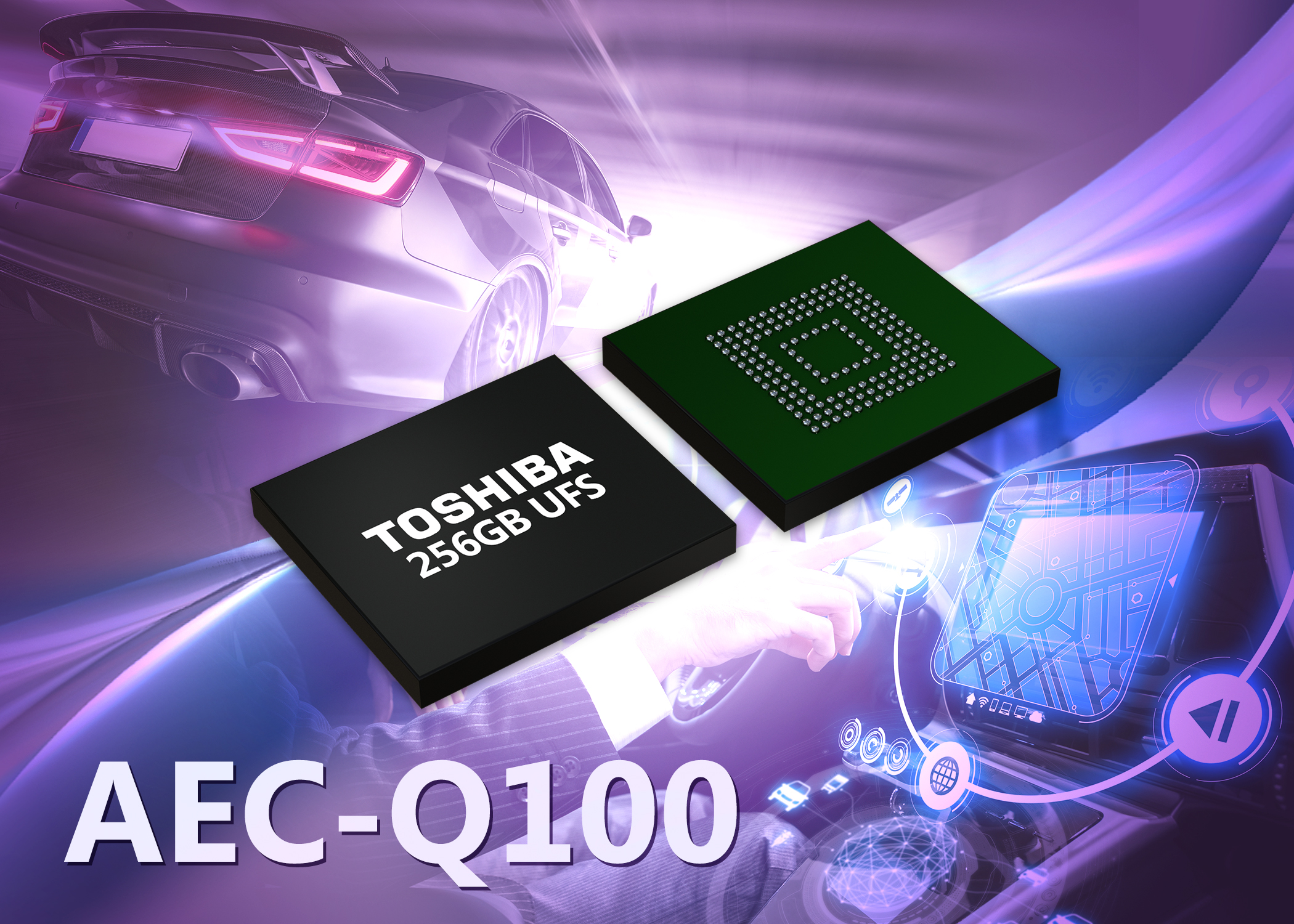
With connected cars and autonomous vehicles expected to generate enormous quantities of data, the storage requirements for automotive applications will continue to increase. TMA’s BiCS FLASH-enabled UFS devices provide customers an option that is better suited to support their high-performance and density needs than existing e-MMC and UFS devices. For example, the 256GB[5] product’s sequential read and write performance[6]are improved by approximately 6 percent and 33 percent, respectively, over previous generation devices.

The new UFS devices feature several functions well-suited to the requirements of automotive applications including Refresh, Thermal Control and Extended Diagnosis. The Refresh function can be used to refresh data stored in UFS and helps extend the data’s lifespan. The Thermal Control function protects the device from overheating in the high-temperature circumstances that can occur in automotive applications. Lastly, the Extended Diagnosis function helps users easily understand the device’s status.

Technology advances in automotive information and entertainment systems, ADAS[8] and autonomous driving will continue to push the storage demands in automotive applications ever higher. As these demands continue to grow, TMA will retain a leadership position in the market by reinforcing its lineup of high-performance, high-capacity memory solutions targeting the sector.

Key Features

  1. Extended Temperature Range: Supports operating temperature range of -40°C to +105°C. Reliability tests were conducted to meet AEC-Q100 Grade2 specifications.
  2. Wide Capacity Range: Supports wide capacity range from 32GB to 256GB[5]. Suitable for a wide variety of automotive applications, such as entertainment and information systems and ADAS, which typically require high-capacity storage – as well as other applications (such as wireless communication) that may need only smaller capacity.
  3. High Performance: 256GB[5] product’s sequential read and write performance are improved by approximately 6 percent and 33 percent, respectively, over previous generation devices.
  4. Functions Well-Suited for Automotive Applications: Supports functions designed for automotive applications such as Refresh, Thermal Control and Extended Diagnosis.
You may also like:

  • SSDs
    SSDs: secure erase or sanitize?
  • SSDs
    SSDs vs. HDDs Part 2: Sand or Rust?
  • MRAM
    What are MRAMs?
  • SSDs
    NVMe vs SATA: What’s the difference and which is faster?

  • Can SSDs replace all storage and memory?

Filed Under: microcontroller, Storage Tagged With: toshibamemoryamerica

Reader Interactions

Leave a Reply Cancel reply

Your email address will not be published. Required fields are marked *

Primary Sidebar

Featured Contributions

Edge AI without the guesswork: designing for real battery life, real performance, and real workloads

Designing for functional safety in robotics: key considerations for engineers

Can chiplets save the semiconductor supply chain?

Navigating the EU Cyber Resilience Act: a manufacturer’s perspective

The intelligent Edge: powering next-gen Edge AI applications

More Featured Contributions

EE TECH TOOLBOX

“ee
Tech Toolbox: Aerospace & Defense
This Tech Toolbox dives into the technical realities of modern defense, exploring how MBSE is streamlining aerospace design and what’s next for radar and electronic warfare.

EE Learning Center

EE Learning Center

EE ENGINEERING TRAINING DAYS

engineering
“bills
“microcontroller
EXPAND YOUR KNOWLEDGE AND STAY CONNECTED
Get the latest info on technologies, tools and strategies for EE professionals.

Footer

Microcontroller Tips

EE World Online Network

  • 5G Technology World
  • EE World Online
  • Engineers Garage
  • Analog IC Tips
  • Battery Power Tips
  • Connector Tips
  • EDA Board Forums
  • Electro Tech Online Forums
  • EV Engineering
  • Power Electronic Tips
  • Sensor Tips
  • Test and Measurement Tips

Microcontroller Tips

  • Subscribe to our newsletter
  • Advertise with us
  • Contact us
  • About us

Copyright © 2026 · WTWH Media LLC and its licensors. All rights reserved.
The material on this site may not be reproduced, distributed, transmitted, cached or otherwise used, except with the prior written permission of WTWH Media.

Privacy Policy