• Skip to primary navigation
  • Skip to main content
  • Skip to primary sidebar
  • Skip to footer

Microcontroller Tips

Microcontroller engineering resources, new microcontroller products and electronics engineering news

  • Products
    • 8-bit
    • 16-bit
    • 32-bit
    • 64-bit
  • Applications
    • 5G
    • Automotive
    • Connectivity
    • Consumer Electronics
    • EV Engineering
    • Industrial
    • IoT
    • Medical
    • Security
    • Telecommunications
    • Wearables
    • Wireless
  • Learn
    • eBooks / Tech Tips
    • EE Training Days
    • FAQs
    • Learning Center
    • Tech Toolboxes
    • Webinars/Digital Events
  • Resources
    • Design Guide Library
    • LEAP Awards
    • Podcasts
    • White Papers
  • Videos
    • EE Videos & Interviews
    • Teardown Videos
  • EE Forums
    • EDABoard.com
    • Electro-Tech-Online.com
  • Engineering Training Days
  • Advertise
  • Subscribe

Low-power SoCs target IoT graphics, voice apps

March 15, 2022 By Redding Traiger Leave a Comment

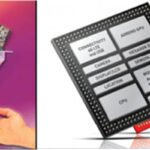
Ambiq introduces an expanded Apollo4 SoC portfolio, including the latest Apollo4 Plus and Apollo4 Blue Plus with Bluetooth Low Energy connectivity with enhanced graphics display capabilities and more robust security features to better protect power-constrained IoT endpoint devices without compromising power efficiency.

The wearables market, including smartwatches, smart bands, and smart glasses, together will generate more than $350 billion in cumulative revenues over the next five years¹. The role of wearables is evolving to become essential in medical, wellness, and fitness applications, where user experience, safety, and security are key factors in their purchasing decisions.

The Apollo4 Plus is the 4th generation system processor solution built upon Ambiq’s proprietary Subthreshold Power-Optimized Technology (SPOT) platform, enabling new features while reducing devices’ overall system power consumption to extend their battery life. Embedded with our megabytes of MRAM, SRAM, ultra-low power processors, solid software stacks, and up to 192 MHz operating frequency with TurboSPOT, the latest SoC to the Apollo4 family empowers more AI-capable operations, including data ingestion, pre-processing, inference, and actuation. Equipped with an ultra-low-power, end-to-end audio subsystem, the Apollo4 is designed to run compute complex algorithms required for precise voice recognition and higher fidelity voice capability needed for voice calls. Its powerful, integrated GPU and display controller, coupled with fast and efficient memory access, offer manufacturers the ability to differentiate their products with bigger and richer display user interfaces with vivid colors, high-resolution and smooth graphics. Ambiq’s Secure by Design features allow OEMs to secure their products from the ground up when implementing SecureSPOT with tools to implement end-to-end security from the start.

The latest addition to the Apollo4 family provides enhanced graphics display and greater voice capabilities to serve as either an application processor or a coprocessor for battery-powered endpoint devices. The Apollo4 Plus is now in mass production, targeting smartwatches and smart bands, consumer medical devices, motion and tracking units, and the smart home of the 21st century.

You may also like:


  • Satellite-based search-and-rescue, Part 1: The overall system

  • How does embedded software work?

  • What is an SoC?

  • Emerging memory technologies – Virtual Roundtable (part 1 of 2)
  • MRAM
    What are MRAMs?

Filed Under: Artificial intelligence/ML, Connectivity, Consumer Electronics, IoT, Medical, Products, Security, SoC, Tools, Tracking, Wearables Tagged With: ambiqmicro

Reader Interactions

Leave a Reply Cancel reply

Your email address will not be published. Required fields are marked *

Primary Sidebar

Featured Contributions

Designing for functional safety in robotics: key considerations for engineers

Can chiplets save the semiconductor supply chain?

Navigating the EU Cyber Resilience Act: a manufacturer’s perspective

The intelligent Edge: powering next-gen Edge AI applications

Engineering harmony: solving the multiprotocol puzzle in IoT device design

More Featured Contributions

EE TECH TOOLBOX

“ee
Tech Toolbox: Electronic Design Automation
This Tech ToolBox helps to clear the path to faster time-to-market by digging into AI-enhanced design, hardware-assisted verification, parasitic extractions, PCB-to-harness integration, and more.

EE Learning Center

EE Learning Center

EE ENGINEERING TRAINING DAYS

engineering
“bills
“microcontroller
EXPAND YOUR KNOWLEDGE AND STAY CONNECTED
Get the latest info on technologies, tools and strategies for EE professionals.

Footer

Microcontroller Tips

EE World Online Network

  • 5G Technology World
  • EE World Online
  • Engineers Garage
  • Analog IC Tips
  • Battery Power Tips
  • Connector Tips
  • EDA Board Forums
  • Electro Tech Online Forums
  • EV Engineering
  • Power Electronic Tips
  • Sensor Tips
  • Test and Measurement Tips

Microcontroller Tips

  • Subscribe to our newsletter
  • Advertise with us
  • Contact us
  • About us

Copyright © 2026 · WTWH Media LLC and its licensors. All rights reserved.
The material on this site may not be reproduced, distributed, transmitted, cached or otherwise used, except with the prior written permission of WTWH Media.

Privacy Policy