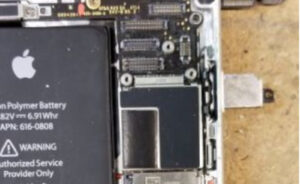
Approaching the launch of the iPhone 12, we look at the internals of an old iPhone widely repurposed today as webcams, security cameras, and iPods. As we write this, the new lineup of iPhone releases expected this fall is said to include models able to work at 5G speeds as well as a new case […]
FAQ
Basics of GPS receivers
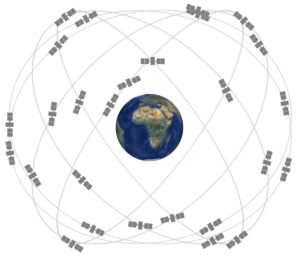
The Global Positioning System (GPS) is the most widely used satellite navigation system around the world. It is one of the Global Navigation Satellite Systems (GNSS) that provides geolocation, time, and velocity information. GPS is operational since 1978 and globally available since 1994. The latest GPS receivers provide geolocation with an accuracy of 30 centimeters. […]
Memory-centric computing and memory system architectures
This three-part FAQ series began by considering “Memory Basics – Volatile, Non-volatile and Persistent.” Part two looked at “Memory Technologies and Packaging Options.” Recently developed persistent memory technologies, three-dimensional packaging for memories, advanced multicore processors, demands to process larger and larger datasets and databases, and artificial intelligence are driving the emergence of a new category […]
Memory technologies and packaging options

Solid-state memory devices are available in a wide variety of standard package styles that they have in common with other semiconductor devices, including DIP, TSSOP, DFN, WLCSP, and many others. And various packages are offered in plastic, glass, ceramic, and metal containing one or more devices. They are also available in hermetically-sealed packages and non-hermetic […]
Memory basics – volatile, non-volatile and persistent
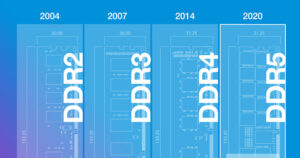
Computers, gaming consoles, telecommunications, automobiles, industrial systems, and myriad electronic devices and systems rely on various forms of solid-state memory for operation. Designers need an understanding of the various options for volatile and non-volatile memory devices to optimize the performance of systems. A new form of solid-state memory called persistent memory (PMEM) has recently emerged […]
Optimizing in-vehicle data networks

Physical channels have limits that affect the practicalities of automotive network architecture and communication protocols. Here’s the lowdown on current work aimed at breaking bandwidth bottlenecks. CHRISTIAN RUSCH, BERT BERGNER | TE Connectivity It has become a truism that we have an insatiable appetite for data. Not so obvious is the effect our need for […]
The sense-think-act model of autonomous vehicles
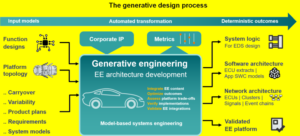
Electronics and software tend to be more important than the mechanics of autonomous vehicles. This shift has serious implications for how vehicles are designed. Puneet Sinha | Mechanical Analysis Div., Mentor, a Siemens business Though certain autonomous functions, especially driver-assist and active-safety features, have started to show up in some recent-model vehicles, the goal of […]
OEM guide to ADAS development
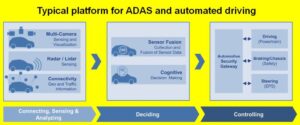
As automotive electronics becomes more complex, the quest is on for economical ways to cover the widest possible range of requirements. Eric Pinton | Renesas Electronics In recent years, few topics have stoked the automotive industry’s collective enthusiasm like autonomous vehicles. Pushed by widely publicized breakthroughs in connected vehicle development, deep learning software, and data-driven […]
Open standards for driverless cars

Why unsafe autonomous vehicle systems are passing undetected during development. By Dr. Luca Castignani, MSC Software In February, McAfee exposed the alarming gap between the road test and real-world performance of autonomous vehicle sensors. In a demonstration, McAfee was able to fool a Tesla car into accelerating to 85 mph in a 35 mph zone […]
CAN for better autonomous vehicles
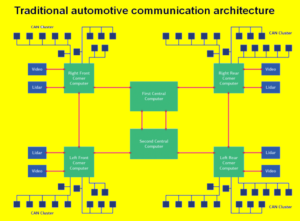
Handing data-intensive lidar and radar processing at the sensor itself can let CAN connections make autonomous vehicle networking more economical. KENT LENNARTSSON | Kvaser AB There’s no question that as the autonomous driving capabilities advance, so do the requirements for transmitting large amounts of data. A 2017 paper by Stephan Heinrich, currently a systems architect […]
