Edge AI is no longer experimental. From wearables and medical sensors to smart home devices, industrial monitors, and infrastructure nodes, products are increasingly expected to sense, analyze, and make decisions locally while operating for months or even years on small batteries. This requirement has turned ultra-low-power system design into one of the most complex challenges […]
AI Engineering Collective
What is generative AI channel modeling, and why does it matter?
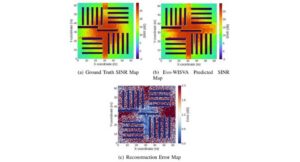
As we move toward 5G Advanced and 6G, the way we model the wireless medium is shifting. The old, standardized models are no longer sufficient. We need high-dimensional, site-specific systems, such as Multiple-Input Multiple-Output (MIMO), to work effectively. This FAQ will discuss how we are moving from those generic scenarios to what we call “neural […]
How to approach AI hardware design to address the memory wall?
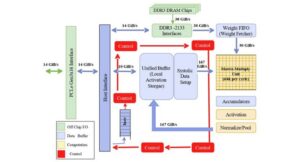
The transition from general-purpose computing to AI-specific hardware is driven by the specific computational and energy requirements of deep learning models. As these models scale to trillions of parameters, traditional architectures face the memory wall, where the energy required for data movement between memory and processing units significantly exceeds the energy consumed by the computation […]
What are the benefits of RISC-V in AI, ML, and embedded systems?
The open-source nature of RISC-V brings the benefits of a modular and royalty-free instruction set architecture (ISA) that eliminates licensing fees, can accelerate development, and fosters customization for diverse applications, including artificial intelligence (AI), machine learning (ML), the Internet of Things (IoT), and embedded systems. Automation levels are being increased in many types of applications, […]
How is physical artificial intelligence used to optimize data center efficiency?

Physical AI (PAI) in data center power systems uses machine learning for predictive maintenance, energy optimization, load balancing, and physical security. In essence, PAI is being used for data center optimization to support the demands of digital AI (DAI) applications like training large language models (LLMs), running inference for real-time applications, and supporting infrastructure like […]
What is an AI governor and how does it relate to physical AI?

An AI governor is a framework, set of policies, or an oversight mechanism designed to ensure that the development and use of AI systems are ethical, safe, transparent, and compliant with legal and societal standards. The term can also refer to an actual piece of code or circuit (governor logic) used as a safety mechanism […]
Entry-level AI MCU enables low-power edge inference on one chip
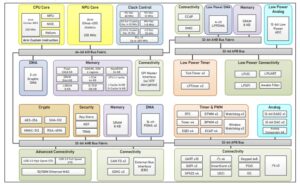
The NuMicro M55M1 AI MCU from Nuvoton Technology, developed in collaboration with the Industrial Technology Research Institute, integrates an Arm Cortex-M55 core with an Arm Ethos-U55 micro-NPU to deliver about 110 GOP/s for edge AI inference. The device includes up to 1.5 MB SRAM and 2 MB Flash with optional HyperRAM and HyperFlash expansion, enabling […]
How is physical AI used in autonomous and electric vehicles?
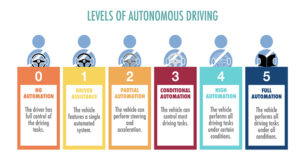
Physical AI (PAI) in autonomous and electric vehicles (EVs) involves systems that perceive the environment, make intelligent decisions, and execute appropriate actions in real-time, bridging the gap between digital intelligence and physical motion. PAI is autonomous, and electric vehicles can be used for several functions. Initially, it’s helping improve battery management and energy efficiency. In […]
What are the applications of physical artificial intelligence?

Physical artificial intelligence (PAI) enables machines to perceive, reason, and act within the real world, bridging the gap between digital AI (DAI), sometimes called virtual AI, and physical action. PAI often leverages spatial artificial intelligence (SAI) technology. PAI applications span numerous industries, from basic automation to autonomous vehicles and complex surgical procedures. PAI applications represent […]
What is physical artificial intelligence and why is it important?

Physical artificial intelligence (PAI) refers to AI systems that can perceive, understand, reason about, and interact with the physical world in real time through sensors and actuators. Unlike digital AI (DAI), which operates in virtual domains, PAI powers tangible actions in dynamic, real-world environments. PAI is used in closed-loop systems where the AI model not […]
