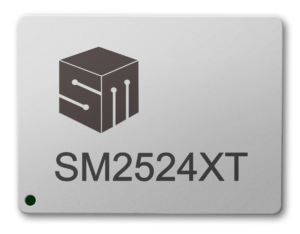
Silicon Motion Technology Corporation has introduced the SM2524XT, a PCIe Gen5 x4 DRAMless SSD controller designed for AI inference and KV cache-intensive workloads. Built on a 6 nm process, it uses a four-core architecture, supports NAND interface speeds up to 4,800 MT/s, delivers sequential read speeds up to 14 GB/s and random performance up to […]
AI Engineering Collective
How are AI-assisted models changing EV battery thermal management strategies?
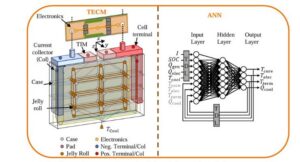
AI battery thermal management now relies more on models that are primarily data-driven. Physics-based thermal models are accurate under controlled conditions but cannot adapt in real time to the variable loads, charge rates, and degradation states EV batteries encounter in service. This technical FAQ discusses how AI thermal models compare to physics-based approaches and which […]
OpenClaw is open-source edge AI for (almost) every application
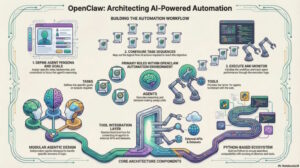
OpenClaw is being touted as the “operating system for personal AI.” It’s being supported by a wide array of companies, including NVIDIA. Target applications range from generative and agentic AI in consumer devices like smartphones, edge applications like medical devices, and physical AI (PAI) in robotics. Formerly called Clawdbot, OpenClaw is designed to fill a […]
Validating real-time performance of AI-enabled embedded systems

by Michael Chabroux, Vice President, Wind River AI is moving fast from data centers to the edge. Embedded systems in cars, medical devices, and factories can now run AI inference alongside their traditional control functions. That shift is forcing engineers to rethink how these systems are designed and validated. In the cloud, a short delay […]
Up to 40 TOPS targets on-device AI workloads

Intel® has introduced its Intel Core™ Series 3 mobile processors for value laptops, commercial systems and essential edge devices, built on Intel Core Ultra Series 3 (Panther Lake) and manufactured on the Intel 18A process node. The processors support up to 40 platform TOPS for AI workloads and include up to two integrated Thunderbolt™ 4 […]
Edge AI without the guesswork: designing for real battery life, real performance, and real workloads

Edge AI is no longer experimental. From wearables and medical sensors to smart home devices, industrial monitors, and infrastructure nodes, products are increasingly expected to sense, analyze, and make decisions locally while operating for months or even years on small batteries. This requirement has turned ultra-low-power system design into one of the most complex challenges […]
What is generative AI channel modeling, and why does it matter?
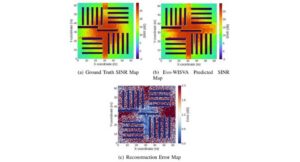
As we move toward 5G Advanced and 6G, the way we model the wireless medium is shifting. The old, standardized models are no longer sufficient. We need high-dimensional, site-specific systems, such as Multiple-Input Multiple-Output (MIMO), to work effectively. This FAQ will discuss how we are moving from those generic scenarios to what we call “neural […]
How to approach AI hardware design to address the memory wall?
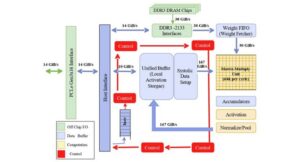
The transition from general-purpose computing to AI-specific hardware is driven by the specific computational and energy requirements of deep learning models. As these models scale to trillions of parameters, traditional architectures face the memory wall, where the energy required for data movement between memory and processing units significantly exceeds the energy consumed by the computation […]
What are the benefits of RISC-V in AI, ML, and embedded systems?
The open-source nature of RISC-V brings the benefits of a modular and royalty-free instruction set architecture (ISA) that eliminates licensing fees, can accelerate development, and fosters customization for diverse applications, including artificial intelligence (AI), machine learning (ML), the Internet of Things (IoT), and embedded systems. Automation levels are being increased in many types of applications, […]
How is physical artificial intelligence used to optimize data center efficiency?

Physical AI (PAI) in data center power systems uses machine learning for predictive maintenance, energy optimization, load balancing, and physical security. In essence, PAI is being used for data center optimization to support the demands of digital AI (DAI) applications like training large language models (LLMs), running inference for real-time applications, and supporting infrastructure like […]
