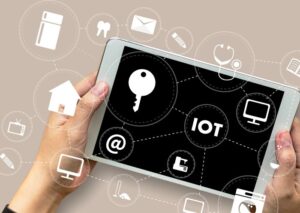
E-ink has the potential for delivering wireless color screens on IoT devices that consume little power. Bill Cheung, Orient Display Despite being conceived in the 1970s, e-ink only received wide recognition after the introduction of the Amazon Kindle in 2007. Other manufacturers had used the technology, but none had the practical elegance and reach of […]
FAQ
What is IOTA?

IOTA is a cryptocurrency designed to add economics to the internet of machines. IOTA is quite different from thousands of other cryptocurrencies. Some key highlights of IOTA are as follows: IOTA is specifically designed for the Internet of Things. IOTA does not use blockchain technology; instead, it is based on Tangle technology. IOTA has theoretically […]
International performance and safety standards for robots
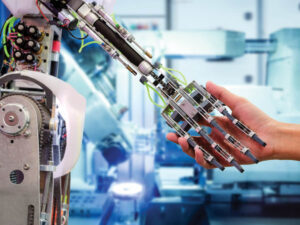
Robots are being used to implement logistics tasks, industrial processes, personal care, medical procedures, and more. The growing variety of robot designs and the breadth of tasks that robots perform is driving a large number of specific performance and safety standards. This FAQ reviews emerging standards for industrial mobile robots, collaborative robots (also called ‘cobots’), […]
Sentient robots and artificial intelligence
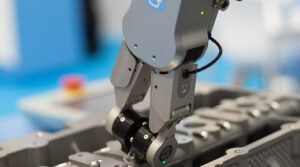
Sensors for touch, vision are on the leading-edge of robotics developments. Sensors enable robots to gather information about the environment, determine how the environment may be changing, and provide the data to determine the appropriate response to any changes. Sensor information can be used to improve performance of the task at hand, or it can […]
Robot software environments and motion control architectures
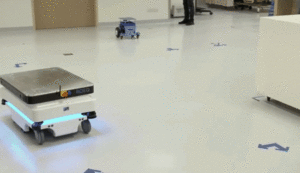
Robots can be classified by their kinesiology, their mechanical performance specifications, and various types of software they employ. This FAQ will consider robot software environments and motion control architectures. The next FAQ will delve into “Sentient robots and artificial intelligence.” The series will conclude with a review of the major “International performance and safety standards […]
Robot axes, drive safety, and power architectures
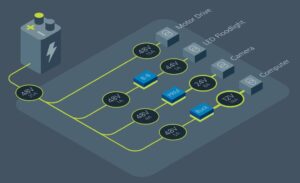
Depending on the intended tasks and the associated range of motion, robots can have varying axes and various axis configurations called robot kinesiology. This FAQ will consider robot axes, kinesiology, drive safety functions, and power architectures. Subsequent FAQs will focus on “Robot software environments and motion control architectures,” “Sentient robots and artificial intelligence,” and “International […]
LCD contrast vs temperature

by Bill Cheung, Orient Display The LCD has been widely used in different applications, such as automotive, home appliance, medical, industrial, communication, entertainment, consumer devices, etc. It has been the most popular display technology for more than a decade after surpassing CRT. But the LCD has its genetic drawbacks, such as narrow viewing angle, slow […]
Automotive LiDAR slides down the cost curve
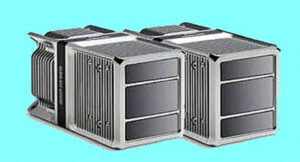
Techniques now emerging from research labs will help make it affordable for next-generation autonomous vehicles to keep out of harm’s way. There’s a dirty little secret associated with the autonomous vehicle (AV) prototypes now feeling their way along roads and byways: Many of them depend on expensive LiDAR light detection and ranging) sensors to detect […]
The pros and cons of the Raspberry Pi 400

In many ways, Raspberry Pi falls short as a full-fledged personal computer. The Raspberry Pi Foundation has tried to change this with its latest addition, the Raspberry Pi 400. Launched in November of 2020, the Raspberry Pi 400 is a single-board computer in the form of a keyboard, retailing at $70 per unit or $100 […]
What are system integration issues with FPGAs?
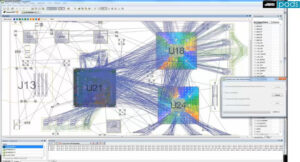
FPGAs are complex devices and are being used in more and more systems. The complexity of FPGAs is both a strength and a weakness. It’s a strength because of the many system performance benefits and capabilities they bring for designers to leverage. It’s a weakness because of the complexities of successfully integrating high pin-count FPGAs […]
