
In today’s connected world, IoT devices are asked to do more than ever — often serving as a bridge between cloud services, smartphones, and dense networks of local sensors. This requires a seamless combination of wireless protocols: Wi-Fi for high-throughput data and cloud connectivity, Bluetooth for mobile pairing and provisioning, and Thread or Zigbee for […]
Featured
When should you use RAG, TAG, and RAFT AI?
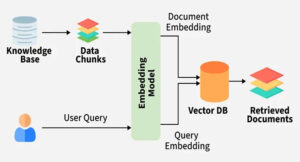
Retrieval-augmented generation (RAG) and table-augmented generation (TAG) are both techniques to improve the ability of artificial intelligence (AI) to generate accurate and relevant information by leveraging external data. Other choices include retrieval-augmented fine-tuning (RAFT) and retrieval-centric generation (RCG). Understanding when to use RAG, TAG, RAFT, and RCG can be crucial to successful and efficient AI […]
What is JESD209-6 and why is it important for edge AI?

JESD209-6, the recently released LPDDR6 (low power double data rate 6) standard by JEDEC, represents a significant leap forward in memory technology, particularly for devices with limited power budgets. It’s crucial for the next generation of mobile devices, AI applications, and edge computing, where high performance and power efficiency are paramount. It’s also expected to […]
What’s slowing down Edge AI? It’s not compute, it’s data movement

When building edge AI systems, engineers often assume compute is the primary bottleneck. But in most cases, it’s the inefficiencies of data movement between sensors, memory, and processors that dominate power and latency. This article explains why and how in-memory-compute architectures can help. Why your Edge AI chip falls short Most engineers deploying AI at […]
What kinds of tools are available for optimizing edge AI performance?
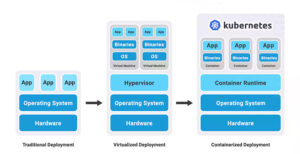
Developers can turn to model optimization frameworks and libraries, model optimization, distillation, and compression tools, plus hardware-specific optimization tools and development platforms for optimizing edge AI performance. Kubernetes and containerization provide additional tools for optimizing AI edge performance. Frameworks and libraries are collections of pre-written code. Libraries are collections of components, classes, and methods that […]
What are the hardware strategies for building energy-efficient AI accelerators?
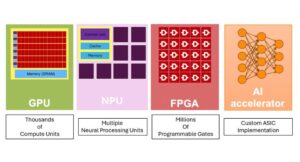
Artificial intelligence (AI) applications are spreading to more industries every day. However, the amount of energy used by these AI systems has become a significant issue. Modern deep neural networks require a considerable amount of computing power. This article examines five key hardware strategies for building energy-efficient AI acceleration: dedicated accelerator architectures, analog in-memory computing, […]
How to select and place antennas in IoT devices

Impacting range and performance, antenna selection and placement are key design considerations for Internet of Things (IoT) device manufacturers. This article reviews the most widely used IoT antennas and discusses their application-specific functions. It also highlights optimal design and placement strategies, offering detailed guidelines for each antenna type. Range and frequency requirements Range and frequency […]
How can silent data corruption be detected and corrected in AI systems?
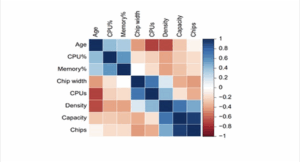
Silent data corruption (SDC), sometimes called bit rot or silent data errors (SDEs), refers to errors in data that are not detected by standard error-checking mechanisms, leading to potentially significant data loss or incorrect calculations. SDCs can lead to inaccurate training, incorrect predictions, and unreliable performance. Detecting SDC requires specialized techniques and tools. SDCs can […]
How can neuromorphic devices be harnessed in edge AI computing?

Neuromorphic computing, which mimics the human brain’s architecture and function, can be leveraged in edge computing to improve power efficiency, speed, and adaptability. By processing data locally and using event-driven computation, neuromorphic chips can optimize resource usage in edge AI applications, reducing reliance on centralized cloud processing. Spiking neural networks (SNNs) are the most common […]
What is ‘compute-in-memory’ and why is it important for AI?

If you are running AI workloads, here is something that might surprise you. Your processors are wasting more energy shuffling data around than actually doing the calculations you care about. This inefficiency is becoming a serious limit for the next generation of artificial intelligence systems. As neural networks grow to billions of parameters, traditional von […]
