• Skip to primary navigation
  • Skip to main content
  • Skip to primary sidebar
  • Skip to footer

Microcontroller Tips

Microcontroller engineering resources, new microcontroller products and electronics engineering news

  • Products
    • 8-bit
    • 16-bit
    • 32-bit
    • 64-bit
  • Applications
    • 5G
    • Automotive
    • Connectivity
    • Consumer Electronics
    • EV Engineering
    • Industrial
    • IoT
    • Medical
    • Security
    • Telecommunications
    • Wearables
    • Wireless
  • Learn
    • eBooks / Tech Tips
    • EE Training Days
    • FAQs
    • Learning Center
    • Tech Toolboxes
    • Webinars/Digital Events
  • Resources
    • Design Guide Library
    • LEAP Awards
    • Podcasts
    • White Papers
  • Videos
    • EE Videos & Interviews
    • Teardown Videos
  • EE Forums
    • EDABoard.com
    • Electro-Tech-Online.com
  • Engineering Training Days
  • Advertise
  • Subscribe

Scott Thornton

Can SSDs replace all storage and memory?

February 14, 2018 By Scott Thornton 5 Comments

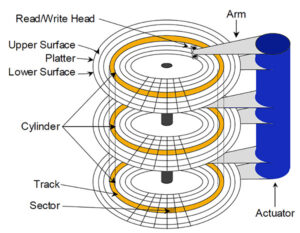
The short answer is no. Here’s why. Solid-State Drives (SSDs) have no mechanical or moving parts, which makes them ideal for mobile devices. SSDs are associated with flash memory and as a replacement for hard disk drive storage for computers. At the lowest level, SSDs are based on transistors (similar to DRAM), but SSD is […]

Filed Under: FAQ, Featured Tagged With: basics, FAQ

A short primer on resistor types

January 21, 2018 By Scott Thornton 1 Comment

resistor types

In general terms, a resistor is a passive electrical component (with two terminals) that is designed to limit the flow of electric current through a circuit. Resistors work by dissipating electrical energy as heat and reducing the flow of electricity through the resistor. Resistors are found in almost all electrical networks and electronic circuits and […]

Filed Under: FAQ, Featured, microcontroller Tagged With: basics, FAQ

RISC vs. CISC Architectures: Which one is better?

January 9, 2018 By Scott Thornton 13 Comments

RISC vs CISC

Reduced Instruction Set Computer (RISC) is a type or category of the processor, or Instruction Set Architecture (ISA).  Speaking broadly, an ISA is a medium whereby a processor communicates with the human programmer (although there are several other formally identified layers in between the processor and the programmer). An instruction is a command given to […]

Filed Under: Embedded, FAQ, Featured, RISC-V Tagged With: basics, FAQ

Arm TrustZone explained

December 28, 2017 By Scott Thornton Leave a Comment

Arm TrustZone

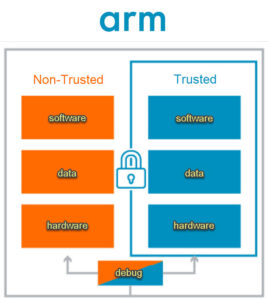
Arm TrustZone is a system-wide approach to embedded security option for the ARM Cortex-based processor systems. Cortex-based cores are used in everything from microcontrollers (MCUs) to high-performance processors. Arm TrustZone is an embedded security technology that starts at the hardware level by creating two environments that can run simultaneously on a single core: a secure […]

Filed Under: Embedded, FAQ, Featured, microcontroller Tagged With: ARM, basics, FAQ

Making sense of displays: OLED, AMOLED, POLED, PMOLED and T-OLED

December 21, 2017 By Scott Thornton 3 Comments

displays

Organic Light-Emitting Diode (OLED) displays are made using organic light emitting diodes, which emit light when current runs through them. The basic colors of light for these diodes are Red, Green, and Blue (RGB), which combine to create an extensive range of colors of visible light. OLED displays are different from Liquid Crystal Displays (LCDs) […]

Filed Under: Applications, AR/VR, Automotive, Consumer Electronics, FAQ, Featured, Industrial, microcontroller, Wearables Tagged With: basics, FAQ

Asynchronous serial communication explained (including TTL, UART, and RS232)

December 13, 2017 By Scott Thornton 4 Comments

A microcontroller can communicate with a computer or another device by using a standard method of communication that has been worked out ahead of time. Serial communication is a very common means of communication. Unless you’ve been working in electronics for a while, you might not have a full handle on the plain facts about […]

Filed Under: FAQ, Featured Tagged With: basics, FAQ

NOR flash and NAND flash memory usage trends are evolving

December 5, 2017 By Scott Thornton 4 Comments

NAND and NOR Flash

Not everyone is familiar with the jargon that experienced engineers and technicians use when they talk about Microcontrollers (MCUs) and memory. NAND and NOR flash memories are used both externally and integrated with MCUs onto System-on-Chips (SoCs) and memory usage trends are evolving around other changes in technology. Both NOR and NAND flash have a […]

Filed Under: Embedded, FAQ, Featured, microcontroller Tagged With: basics, FAQ

The improved inter-integrated circuit (I3C)
November 29, 2017 By Scott Thornton 2 Comments

I3C

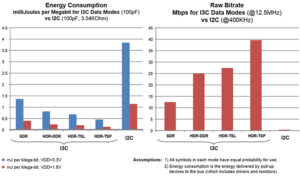
A new successor to the Inter-Integrated Circuit (I2C or I2C) bus communication interface is under development, hosted by the Sensor Working Group at the MIPI Alliance. The Improved Inter-Integrated Circuit, I3C, (pronounced “Eye-three-See”) is backward compatible with I2C but will be better suited for handling an abundance of sensors. The I3C specification was released in […]

Filed Under: Applications, Connectivity, FAQ, Featured Tagged With: basics, FAQ

Magnetic Reed switch: an amazing addition to your design toolbox
November 6, 2017 By Scott Thornton Leave a Comment

magnetic/reed switch

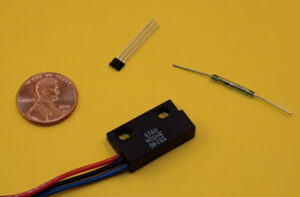
Reed switches are simple, passive, electromechanical components that were invented circa the 1940s. Reed switches aren’t mentioned much in electronic literature or forums that much, but they have some amazing capabilities. Reed switches are sometimes called magnetic switches. Reed switches open or close when exposed to a magnetic field. The reed switch consists of a […]

Filed Under: FAQ, Featured Tagged With: basics, FAQ

Driving high-wattage output with a solid-state relay
October 17, 2017 By Scott Thornton 1 Comment

solid-state relays

Microcontrollers are designed to handle only low voltage and current signals on their input and outputs.  So how does one control and drive a high wattage load such as an electric heater using an MCU?  One of the easiest and most efficient ways is to use a Solid-State Relay (SSR). An SSR allows you to […]

Filed Under: Applications, FAQ, Featured, microcontroller Tagged With: basics, FAQ, ixys

  • « Go to Previous Page
  • Page 1
  • Interim pages omitted …
  • Page 3
  • Page 4
  • Page 5
  • Page 6
  • Page 7
  • Interim pages omitted …
  • Page 10
  • Go to Next Page »

Primary Sidebar

Featured Contributions

How software segregation minimizes the impact of AI/ML on safety-critical software

Future connected car

10Base-T1S/L connects sensors in cars and buildings

Matter 1.2 is here — what does that mean for the smart home? 

LCD contrast vs temperature

IoT standards

IoT standards: The End Game

More Featured Contributions

EE TECH TOOLBOX

“ee
Tech Toolbox: Electronic Design Automation
This Tech ToolBox helps to clear the path to faster time-to-market by digging into AI-enhanced design, hardware-assisted verification, parasitic extractions, PCB-to-harness integration, and more.

EE Learning Center

EE Learning Center

EE ENGINEERING TRAINING DAYS

engineering
“bills
“microcontroller
EXPAND YOUR KNOWLEDGE AND STAY CONNECTED
Get the latest info on technologies, tools and strategies for EE professionals.

Footer

Microcontroller Tips

EE World Online Network

  • 5G Technology World
  • EE World Online
  • Engineers Garage
  • Analog IC Tips
  • Battery Power Tips
  • Connector Tips
  • EDA Board Forums
  • Electro Tech Online Forums
  • EV Engineering
  • Power Electronic Tips
  • Sensor Tips
  • Test and Measurement Tips

Microcontroller Tips

  • Subscribe to our newsletter
  • Advertise with us
  • Contact us
  • About us

Copyright © 2026 · WTWH Media LLC and its licensors. All rights reserved.
The material on this site may not be reproduced, distributed, transmitted, cached or otherwise used, except with the prior written permission of WTWH Media.

Privacy Policy