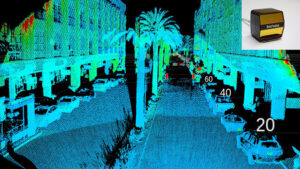
Automakers are struggling to deliver the first commercially available fully autonomous car (SAE Level 5). There are a lot of vision technologies and sensors available, but fine-tuning them has proved to be challenging. Cars need to “see” objects, moving or stationary, from far away enough to react and make driving decisions. One of the most […]
Automotive
A better way to measure LiDAR
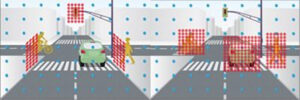
The special demands of sensors needed for autonomous driving have brought suggestions for different measurement metrics. Leland Teschler, Executive Editor A few months ago, sensor maker AEye made a media splash when it claimed it had developed a super-speedy LiDAR sensor that could hit a scan rate of 100 Hz or more. That speed outpaces […]
Common mode choke coils optimized for CAN FD vehicle networks
Murata has introduced the wire-wound common mode choke coil (CMCC) DLW32SH101XF2, the first CMCC to support DCMR Class 3, fulfilling the IEC62228-3 requirement for use in CAN FD next-generation automotive networks. Mass production of this product will begin in August 2019. In the automotive industry, technologies that control basic automobile behavior are advancing rapidly with […]
What high-speed data means for connected vehicles
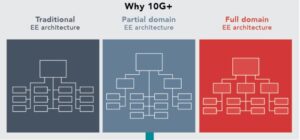
Technologies behind multigigabit Ethernet and 5G could transform transportation. Harsh Patel | Molex The connected vehicle segments are growing at a rapid pace. By 2020, industry analysts predict there will be 250 million connected vehicles and 10 million self-driving cars on the road, and 470 million connected/autonomous vehicles by 2025. As the number of connected […]
Flash memory keeps cars connected
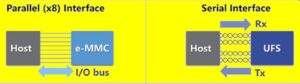
A new kind of flash memory is optimized specifically to handle the hostile environment imposed on electronics in vehicular uses. Leland Teschler | Executive Editor You’d have to say the NAND flash memory had an inauspicious beginning. Invented in 1987 by Toshiba, the first NAND flash chip didn’t sell until 1995 when it finally found […]
Data injection — Testing autonomous sensors through realistic simulation
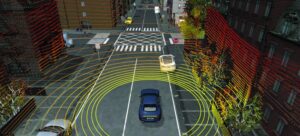
Proof that autonomous vehicles are safe to put on the road begins with rigorous models of the sensors that guide them. Holger Krumm | dSPACE GmbH Onboard sensors are critical for autonomous vehicles to navigate the open road, but the real environment is full of obstacles. Everyday interferences such reflective surfaces, whiteout conditions, fog, rain, […]
Bluetooth and the road to a keyless future
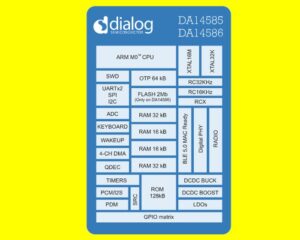
Efforts are underway to let smartphones double as car keys. Erik Peters, Dialog Semiconductor From hands-free calling to tire pressure monitoring systems, Bluetooth has revolutionized the way we interact with our vehicles and how the vehicle itself communicates with other technology systems and services. So, what’s next? Improved internet connectivity and other technological advancements have […]
First implementations of Bluetooth-enabled keyless cars reveal a few bugs
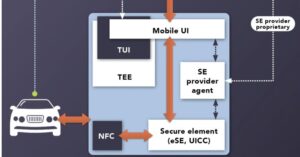
The first production vehicle to employ a Bluetooth (actually a BLE) digital key is Tesla’s Model 3. When the owner approaches carrying his or her smartphone equipped with Bluetooth, Model 3s can be set to unlock their doors and trunk automatically, and starting the Model 3 is as simple as shifting out of Park. Nevertheless, […]
Spectrum co-existence challenges in the fully connected car
High-performance RF bandpass filters may hold the key to autonomous vehicle communication without interference. Ali Bawangaonwala | Qorvo, Inc. Continuing advances in technology are making the autonomous vehicle a practical reality, and there is frequent discussion among technologists about Wi-Fi and 5G as enablers of the connected car. Equally important, but less talked about, are […]
How GMR wheel speed sensors help advance vehicle control and braking systems
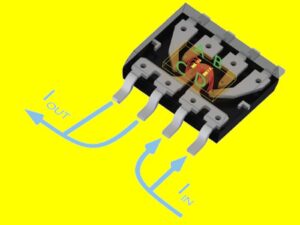
Giant magnetoresistance sensors are strong candidates for the high-accuracy wheel-speed sensing necessary in autonomous vehicle systems. Christine Graham | Allegro MicroSystems The purpose of a braking system has evolved from simplistic stopping to critical functions in vehicle safety through highly accurate feedback to traction control (TCS) and advanced driver assistance systems (ADAS). These advances have […]
